

Material safety is one of the most important factors when sourcing adult wellness products.
For brands, wholesalers, distributors, and private-label businesses, choosing a product should involve more than appearance, functionality, and price. The materials used, chemical compliance, electronic components, battery documentation, and manufacturing quality control can all affect product reliability and long-term brand reputation.
For this reason, professional buyers should not rely only on marketing terms such as “premium silicone,” “high-quality TPE,” or “safe material.”
A better question is:
What material is actually being used, how is it controlled during production, and what supporting documentation is available?
At XISE Industrial, material selection, product testing, and quality control are important parts of our OEM and ODM manufacturing process.
Adult wellness products are often designed for close contact with the body. Material consistency therefore plays an important role in product quality.
Unstable or poorly controlled materials may lead to problems such as unusual odor, inconsistent softness, surface defects, color variation, premature aging, or reduced durability.
For a B2B buyer, these problems can eventually become customer complaints, returns, additional after-sales costs, and damage to brand reputation.
Material evaluation should therefore begin before mass production, not after products have already entered the market.
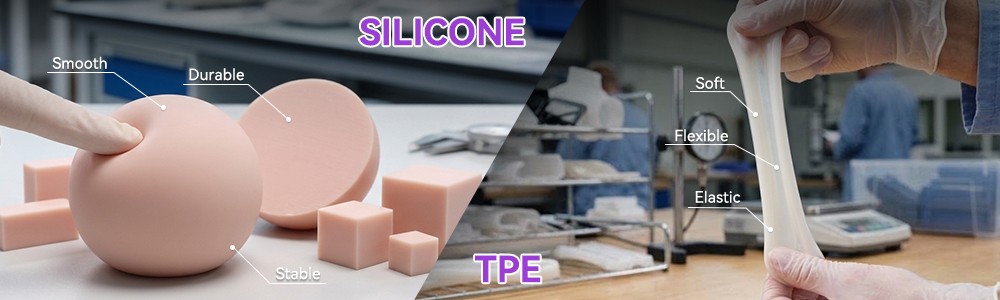
Silicone and TPE are two widely used materials in the adult wellness industry, but the material name alone does not tell buyers enough about actual product quality.
Silicone is commonly used for products requiring a smooth surface, good elasticity, stable appearance, durability, and premium positioning.
Depending on the product design, manufacturers may use different formulations and hardness levels.
Before ordering, buyers should ask about the material type, Shore hardness, surface treatment, color consistency, production process, and available testing documentation.
Terms such as “premium silicone” should always be supported by clear product specifications.
TPE is often used for products requiring greater softness, flexibility, and elasticity.
However, TPE formulations can vary significantly between manufacturers. Two products described as TPE may feel very different in terms of softness, surface finish, elasticity, odor, and durability.
For this reason, professional buyers should evaluate both physical samples and relevant material documentation before placing a bulk order.
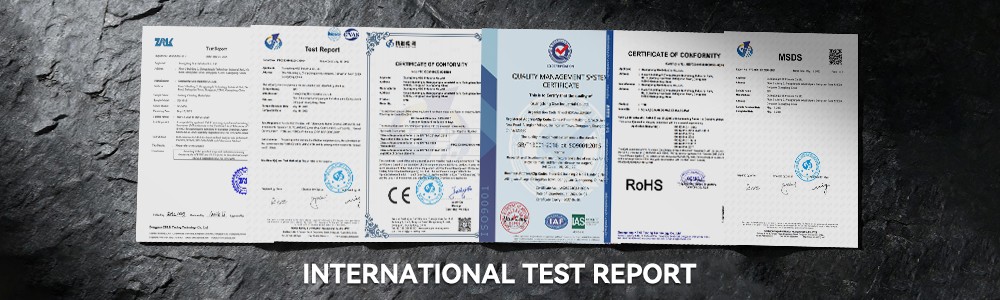
Buyers often ask whether a manufacturer has “certificates,” but different reports and certifications serve different purposes.
Understanding these differences is important.
REACH is an important European Union regulatory framework concerning chemicals.
REACH-related testing or documentation can help buyers understand whether certain restricted or regulated substances have been considered in materials and product components.
When reviewing a REACH report, buyers should confirm exactly which material or product was tested and what substances were included in the testing scope.
RoHS relates to restrictions on certain hazardous substances in electrical and electronic equipment.
For adult wellness products containing circuit boards, motors, charging systems, or other electronic components, RoHS documentation may be relevant.
RoHS should not be treated as a general silicone or TPE material certificate. Its purpose is related to restricted substances in applicable electrical and electronic products.
A Safety Data Sheet provides information about a material or chemical substance, including composition, handling, storage, physical properties, and hazard information.
For B2B buyers, SDS or MSDS documentation can be useful when evaluating raw materials and understanding how they are handled.
However, an SDS is not the same as a finished-product safety test.
UN38.3 is particularly relevant to products containing lithium batteries.
It covers specific testing requirements related to the transportation of lithium cells and batteries.
For rechargeable adult wellness products, battery documentation can be an important part of international shipping and logistics preparation.
UN38.3 therefore relates primarily to battery transportation rather than silicone or TPE material safety.
CE and UKCA relate to product conformity requirements within their applicable markets.
For electronic or smart adult wellness products, the exact requirements may depend on the product design, electrical system, wireless functions, and destination market.
Buyers should confirm which requirements apply to the exact product they plan to sell instead of assuming that one certificate covers every model or market.
ISO 9001 is a quality management system standard.
It does not mean that an individual material has been certified as safe.
Instead, it reflects how a company manages quality-related processes, documentation, production control, and continuous improvement.
For B2B buyers, a structured quality management system can support more consistent mass production.

One of the most important sourcing principles is simple:
Do not only ask whether a supplier has certificates. Ask whether the report applies to your exact product, material, or component.
Buyers should review the product or material name, model number, test standard, testing scope, report date, and testing organization.
This becomes even more important for customized OEM and ODM projects.
If the material, battery, electronic components, internal structure, or other specifications are changed, buyers should confirm whether existing documentation is still applicable.
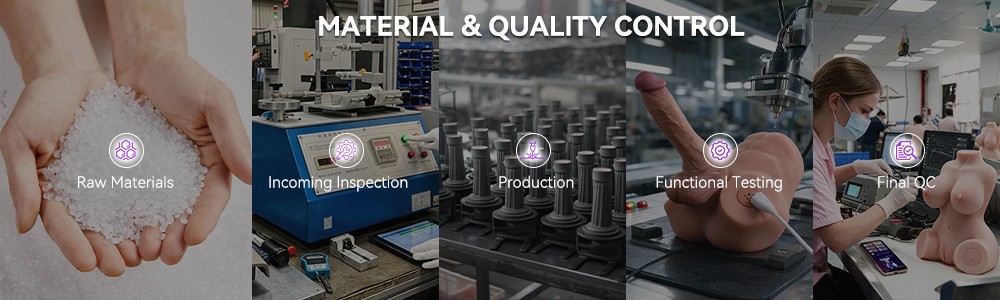
Test reports are important, but documentation alone cannot guarantee production consistency.
Factories also need effective material and production management.
Important areas include raw material sourcing, incoming inspection, batch management, material storage, color control, hardness consistency, molding conditions, surface inspection, functional testing, and final quality inspection.
At XISE Industrial, quality control is integrated into key production stages rather than being limited to final inspection.
The objective is not simply to make one good sample.
The objective is to maintain consistent quality throughout mass production.
Before confirming an order, buyers should understand the exact material being used, available hardness or formulation options, applicable testing documentation, electronic and battery reports where relevant, incoming material inspection procedures, production quality control methods, and whether a pre-production sample can be approved before mass production.
For private-label and ODM projects, buyers should also confirm whether changes in color, material, structure, electronics, or packaging affect existing compliance documentation.
For a professional brand, material quality is not only a technical issue.
It also affects product positioning, distributor confidence, customer experience, market compliance, and long-term brand reputation.
A reliable adult toy manufacturer should therefore be able to discuss more than product appearance and price.
The manufacturer should also be able to communicate clearly about materials, testing documentation, production control, product development, and destination-market requirements.
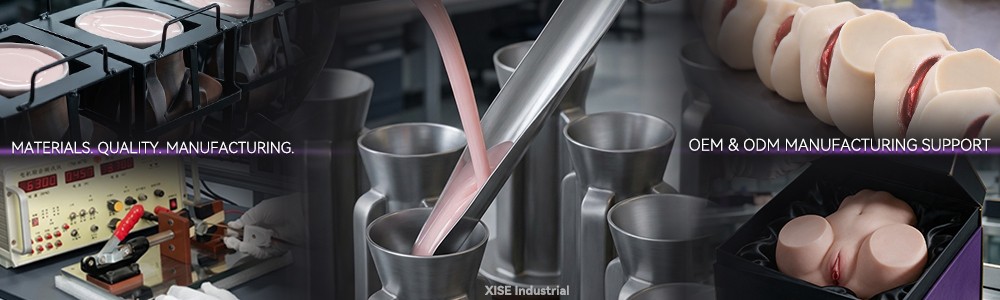
Material safety in adult wellness manufacturing should never be reduced to a simple marketing claim.
Professional sourcing requires buyers to evaluate the actual material specification, physical product samples, relevant testing documentation, electronic and battery requirements, manufacturing consistency, and quality management system.
XISE Industrial supports global brands, wholesalers, distributors, and private-label customers with adult wellness product development, OEM and ODM manufacturing, material selection, quality control, customized packaging, and relevant product documentation based on project requirements.
If you are sourcing silicone, TPE, rechargeable, or smart adult wellness products, contact XISE Industrial with your product category, target market, expected quantity, and customization requirements.
Our team can help evaluate a suitable manufacturing and material solution for your project.